


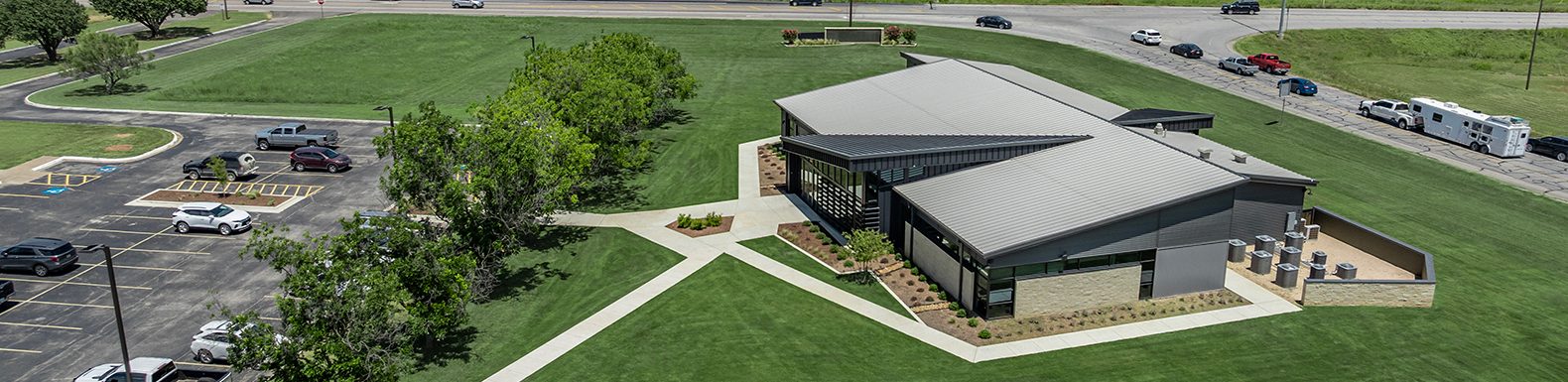
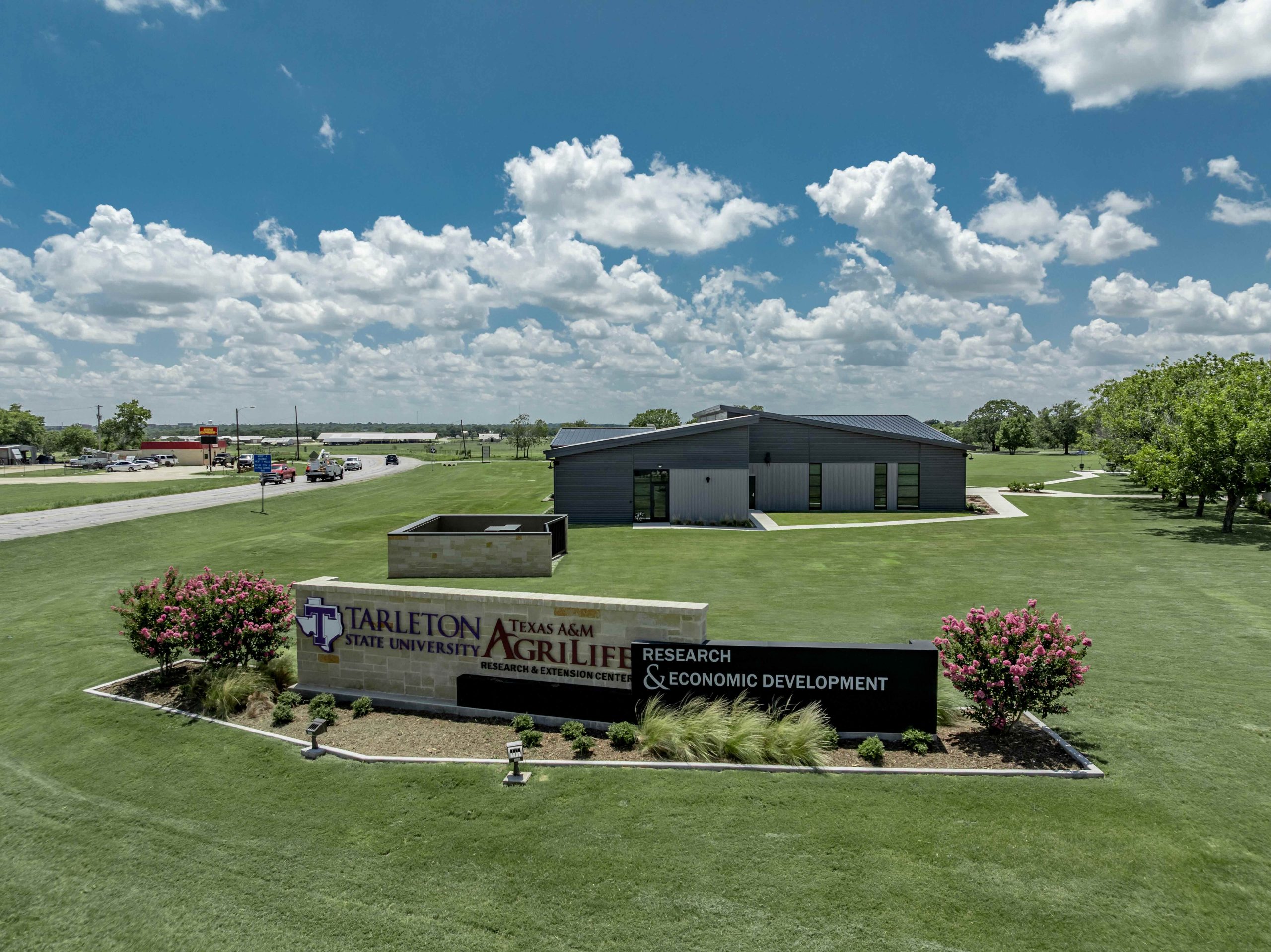
Tarleton State University Research & Economic Development Building
Stephenville, Texas
Expertise
- Education
Services
- electrical engineering
- mechanical / plumbing engineering
Size
- 10,236 SF
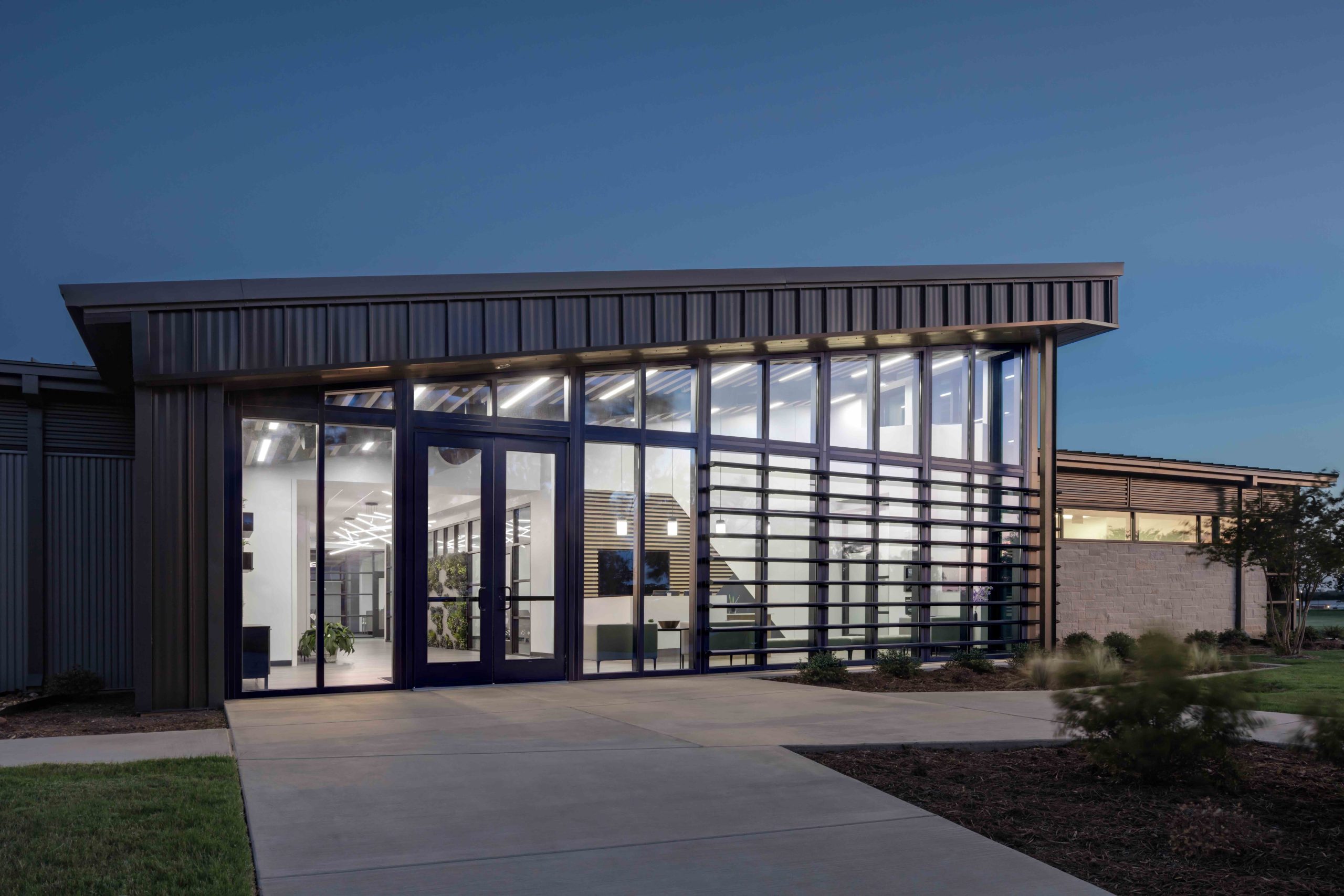
BHB provided MEP engineering services for Tarleton State University’s new Research & Economic Development Building, a 10,236-square-foot, state-of-the-art facility located at the intersection of U.S. Highway 281 and East Lingleville Road in Stephenville, Texas. This innovative building is shared with Texas A&M AgriLife Research and the Texas A&M AgriLife Extension Service, serving as a dynamic hub for collaboration to advance research, improve agricultural practices, and foster economic development across the region.
The facility features a unique architectural design, including a pair of parallel pre-engineered metal buildings and curtainwall systems that maximize natural light throughout the space. The building houses Tarleton State’s Institute for Rural Economic Development and Research and the university’s Small Business Development Center, further supporting the university’s mission to drive regional prosperity and innovation. Sponsored research and regional partnerships are key beneficiaries of this new innovation ecosystem, which is designed to bring together Tarleton State, Texas A&M AgriLife, other Texas A&M System institutions, regional universities, start-up companies, business incubators, and chambers of commerce.
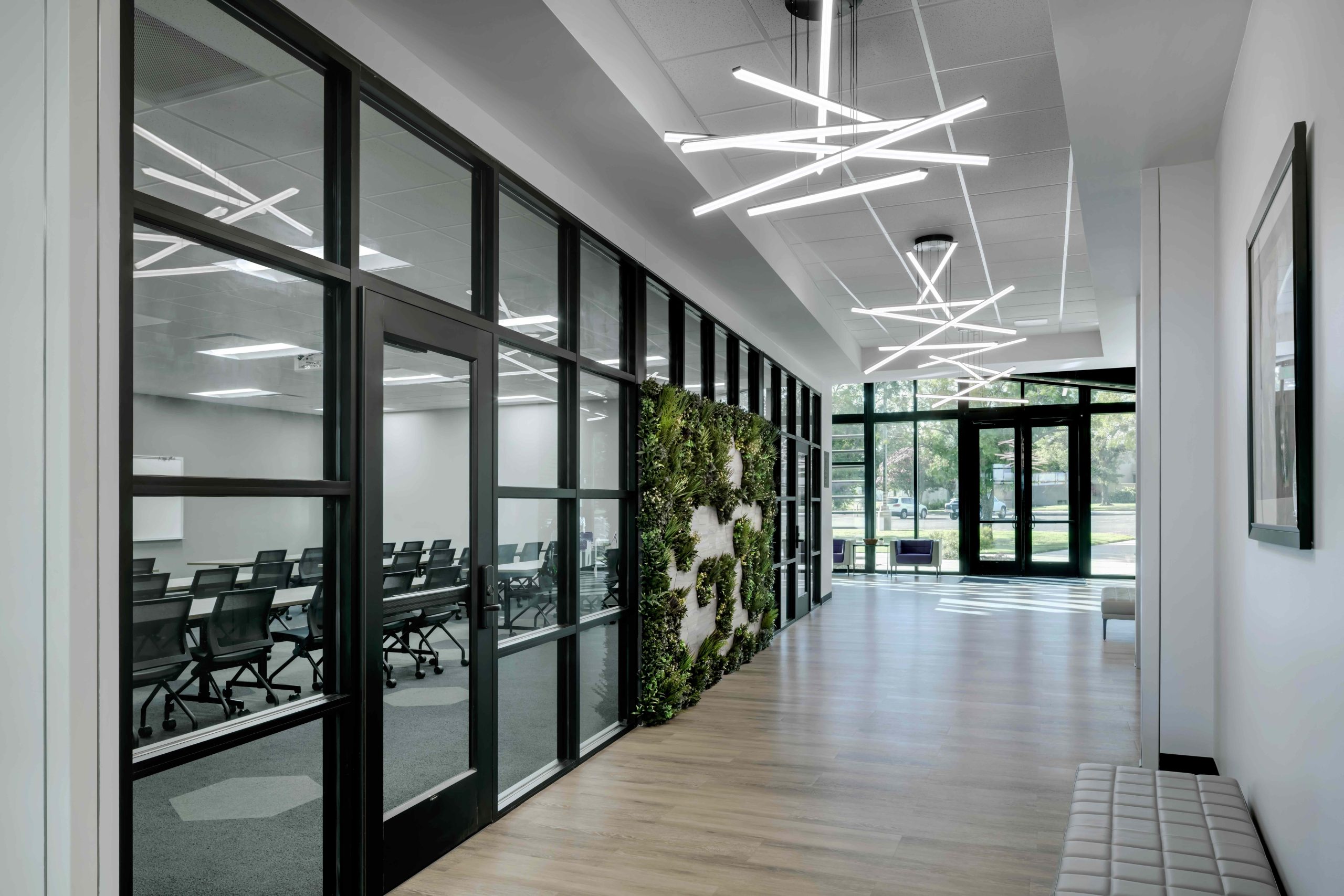
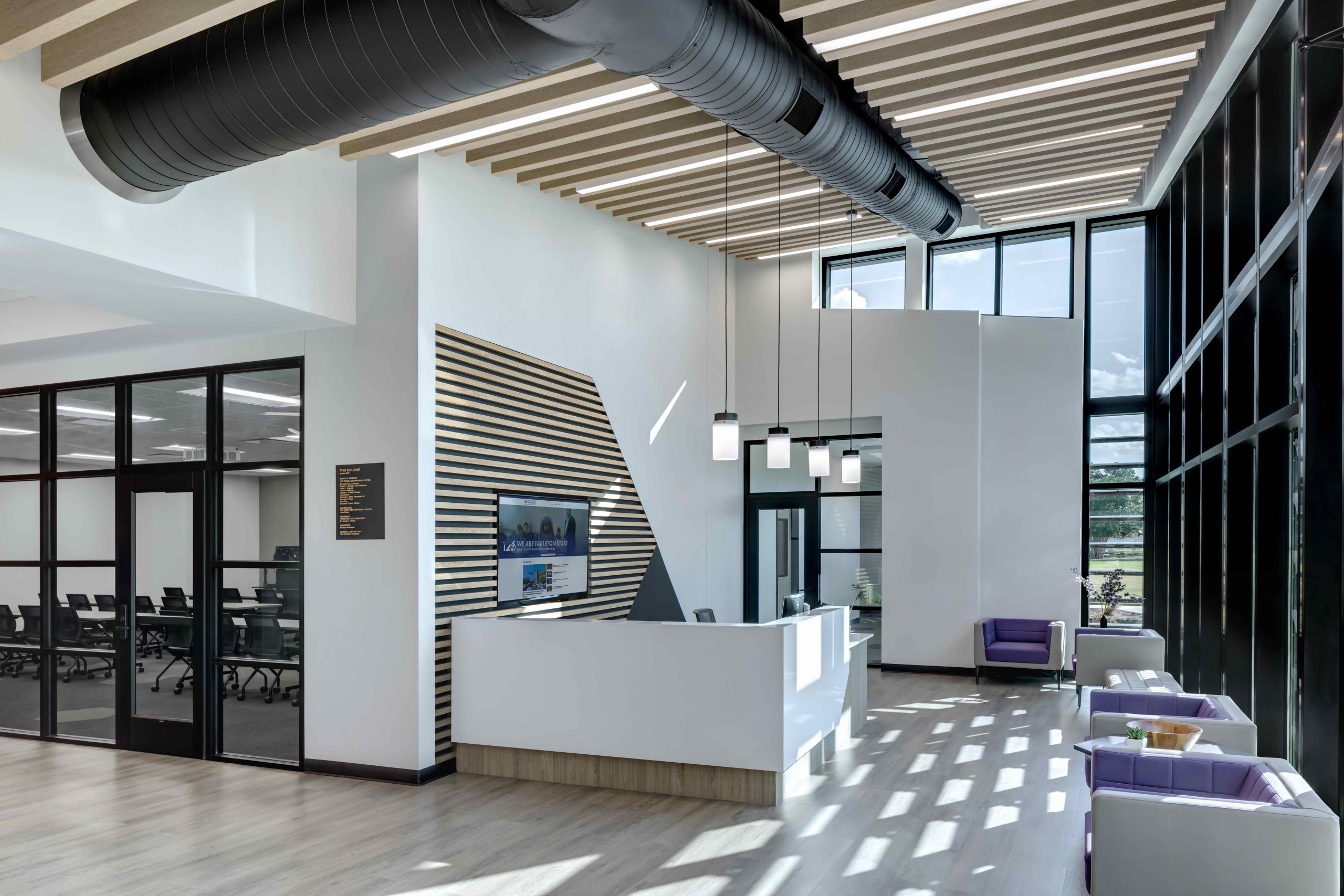
BHB’s mechanical engineering design included a series of split systems with direct expansion (DX) cooling and electric heating, all located in a shared mechanical room. This room was carefully designed to minimize its footprint and maximize usable space for building occupants, while maintaining required clearances and providing easy access for Facilities staff to perform routine maintenance. The team collaborated closely with the architect to provide custom ductwork fittings that complement the building’s unique angles, including exposed ductwork that matches the roof’s angle in the main entry space—a focal point of the building.
Electrical engineering services included an 800-amp, 208-volt/3-phase service for the new building, with receptacles and data outlets provided for the breakroom, meeting rooms, conference rooms, shared offices, and private offices. The project also received a new fire alarm panel and notification system. LED lighting, dimming, and daylighting controls were installed to comply with the International Energy Conservation Code, and exterior lighting was provided for the building’s façade and monument sign.
Key People
-

Ian Bost, PE, LEED AP
Ian Bost, PE, LEED AP
Principal | Senior Mechanical Engineer
Ian Bost began working at BHB in 2001. As one of the youngest and newest additions to the leadership team, Ian still considers himself a kid despite being over the age of 35. Ian’s success at BHB has fostered several new relationships with higher education institutions for which he has become the primary point of contact. His projects at UNT, TCU, and UTA are some of the most technologically advanced for colleges and universities. They have included systems such as single-zone VAV AHUs and chilled beam systems.
Ian’s passion for engineering efficient systems stems from his desire to be a good steward of the land. He is involved with the AIA 2030 Challenge and works closely with our clients to provide sustainable design. Over the years Ian has continuously been involved with professional societies including the American Society of Heating, Refrigerating and Air-Conditioning Engineers (ASHRAE) and the Texas Society of Professional Engineers. His role as a past president of the Fort Worth ASHRAE Chapter has grown into mentorships for new chapter presidents and members.
He tries to live a balanced life with his family: wife Carmen and their four kids. Ian is a Texas Tech Red Raider Alumni who enjoys supporting his college and its athletic programs. Ian enjoys living and promoting a healthy lifestyle.
Project Experience
Arborlawn United Methodist Church
Central Texas College Nursing Center
Keller ISD Timberview Middle School
Northpark YMCA
TCU Annie Richardson Bass Building
TCU Charlie and Marie Lupton Baseball Clubhouse
TCU Ed & Rae Schollmaier Arena
TCU Frog Alley Parking Garage
TCU Mary Couts Burnett Library
TCU Rees-Jones Hall
Education
Texas Tech University:
Bachelor’s Degree/2000/Mechanical Engineering -
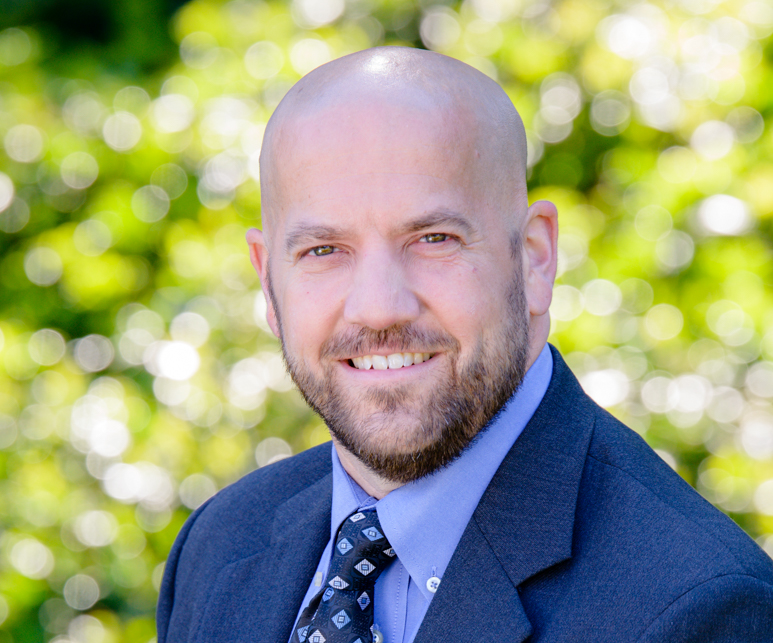
Mark Arnold, LEED AP
Mark Arnold, LEED AP
Associate | Electrical
Mark Arnold started working at BHB in 1998 as an electrical drafter. After realizing how much he enjoyed the field, Mark decided to major in electrical engineering at UTA, where he was previously studying architecture and accounting.
Over 25 years later, Mark now serves as an Associate at BHB. He is a LEED Accredited Professional and is involved in the Texas Society of Professional Engineers. Outside of work, Mark enjoys spending time with his wife, Carrie, and his son, Caleb. The three of them enjoy spending time with their canine family members: Laila and Millie, both Australian Shepherd rescues. Mark also enjoys woodworking in his free time.
Project Experience
Bob Bolen Public Safety Complex
Glade & Pool Road Roundabout
Star-Telegram Building
Tarrant County Northwest Sub-Courthouse
Tarrant County Sub-Courthouse
Weatherford College Professional Services
Education
University of Texas at Arlington:
Bachelor’s Degree/2010/Electrical -

Chandler Iozzi, PE
Chandler Iozzi, PE
Associate | Mechanical Engineer
Chandler Iozzi initially thought she would follow in her family members’ footsteps in the oil and gas industry and study Petroleum Engineering in college, but quickly pivoted to Mechanical Engineering, where she found her niche and excelled. After college, she sought advice from her father, an architect, for recommendations on local MEP firms she may want to apply to, leading her to BHB.
Since coming to BHB in 2018, Chandler has become an important member of the firm’s education team. Working primarily on the firm’s higher education, K-12, municipal, and faith-based projects, she has especially excelled in commercial kitchen design and enjoys working on complex projects. Her experience includes mechanical and plumbing design, VAV systems, VRF systems, and construction administration services. She enjoys participating as an industry mentor for the local student ASHRAE chapter in the ASHRAE Student Competition every year. She also serves as a committee chair and is actively involved in the BHB Women’s Group.
Outside of the office, she enjoys baking sweet treats, crafting, and spending time with her husband, two children, and rescue dog doing anything outdoors. She and her husband are die-hard Texas Tech fans who love to visit Lubbock and cheer on their Red Raiders any chance they get.
Project Experience
Aledo ISD Charles McAnally Middle School
Pathway Church - The Center
Abilene ISD Shotwell Stadium Pressbox Addition
UTA Center for Entrepreneurship and Economic Innovation (CEEI)
Education
Texas Tech University:
Bachelors/2018/Mechanical Engineering