




























































As America celebrates its 250th anniversary, we honor the soldiers who fought for independence, the statesmen who established our government, and the pioneers who settled a vast continent. Yet another profession has made contributions that are woven into every chapter of our nation’s history but seldom recognized: the American land surveyor.
From the first colonial settlements to today’s thriving cities, highways, airports, and industries, surveyors have quietly provided the foundation upon which America was built. Long before the first road was constructed, the first home was built, or the first deed was recorded, someone had to determine where the land began and where it ended. That responsibility belonged to the land surveyor.
The importance of surveying to America is reflected in the remarkable fact that three of our nation’s greatest presidents were surveyors. George Washington began his career surveying the Virginia frontier as a teenager, developing the discipline, judgment, and leadership that would later define his military and political career. Thomas Jefferson, following in his father’s footsteps, was commissioned as Surveyor of Albemarle County, Virginia, in 1773. His appreciation for orderly land measurement later helped shape the Land Ordinance of 1785, establishing the Public Land Survey System that organized much of the American frontier. Abraham Lincoln also worked as a surveyor in Illinois before becoming a lawyer and eventually leading the nation through its greatest constitutional crisis. It is no coincidence that three men who helped found, expand, and preserve the United States all understood the value of accurately measuring and defining the land.
The importance of surveying did not end with these remarkable leaders. Following independence, Congress recognized that an orderly system for measuring and distributing land would be essential to the nation’s future. The Land Ordinance of 1785 established the Public Land Survey System, creating the township-and-range system that still governs much of the United States today. Millions of acres were surveyed into standardized sections, making it possible for settlers to purchase land, communities to develop, and states to grow in an organized and efficient manner. Few government actions have had a greater long-term impact on the development of our nation.
The American Dream has always been closely tied to private property ownership. Families have built homes, farmers have cultivated fields, businesses have invested in their communities, and industries have expanded because property boundaries could be identified with certainty. That certainty does not happen by accident. It is created through the work of professional land surveyors.
Surveyors are often described as measuring land, but their responsibility is far greater. They protect one of our nation’s most fundamental rights: the right to own private property. Every boundary they retrace, every monument they recover, and every property corner they establish helps preserve that right for future generations. In many ways, surveyors serve as impartial guardians of property ownership, ensuring that every landowner receives exactly what the law provides, no more and no less.
As the nation expanded westward, surveyors were among the first professionals to enter new territories. They crossed rivers, mountains, forests, deserts, and prairies long before communities existed. Their work demanded extraordinary courage and perseverance. Many endured disease, severe weather, isolation, dangerous terrain, and violent conflict. Many made the ultimate sacrifice while carrying out their duties, leaving behind the monuments and boundary lines that continue to guide our nation today. They established township corners that still control property ownership more than two centuries later. Railroads, highways, pipelines, reservoirs, schools, hospitals, airports, and neighborhoods all began with a survey. Before engineers can design and contractors can build, surveyors establish the framework that makes every project possible.
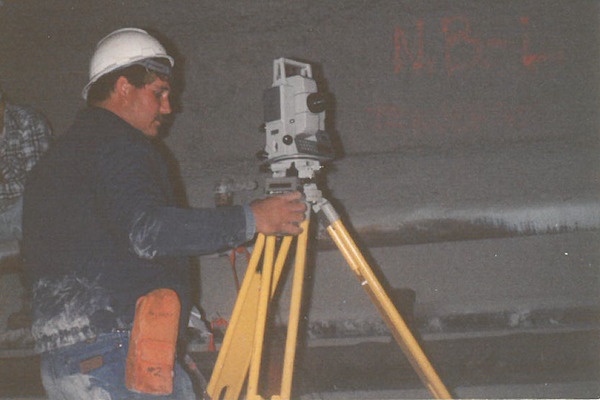
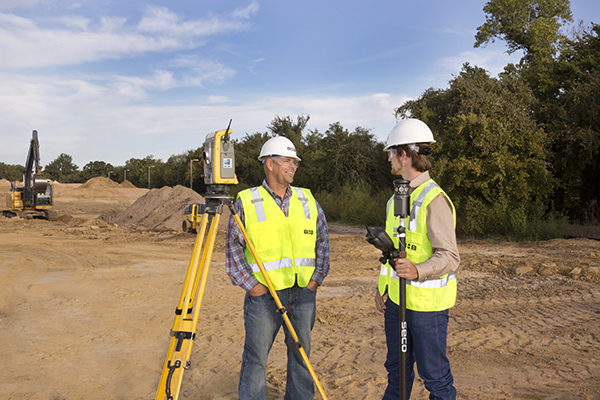
Although today’s surveyors use satellites, robotic instruments, laser scanners, unmanned aircraft systems, and other advanced technologies, the profession’s greatest tool has never been its equipment. It is its ethics. Every licensed surveyor swears a solemn oath to protect the public, and that ethical obligation governs every boundary established, every monument recovered, every map signed, and every professional opinion rendered. Instruments may improve with each generation, but integrity, honesty, ethical conduct, and an unwavering commitment to the public remain the true foundation of the profession.
A survey monument is more than a piece of iron, stone, concrete, or brass. It is a promise carried forward through generations, a physical reminder that private property rights matter, that the rule of law endures, and that every landowner deserves the certainty that comes only from an ethical and impartial survey. Surveyors do not create property rights; they preserve and protect them for those who come after us.
One of the greatest compliments a surveyor can receive is that no one notices their work. When boundaries are correct, deeds are accurate, roads fit within their rights-of-way, utilities occupy the proper easements, and buildings are constructed where they belong, the public rarely gives surveying a second thought. Yet when a boundary is uncertain, or a property line is disputed, the importance of the surveyor becomes immediately apparent.
For two and a half centuries, America’s surveyors have transformed wilderness into communities, ideas into infrastructure, and legal descriptions into places where families live, businesses prosper, and generations build their futures. Their monuments mark more than property corners. They mark the enduring foundation of the United States itself.
As America celebrates its 250th anniversary, it is fitting to honor the profession that has quietly helped make the nation’s success possible. While many professions have contributed to building the United States, none have done so more fundamentally, or more quietly, than the American land surveyor. For 250 years, surveyors have done far more than measure distances; they have protected freedom by safeguarding private property and preserving the rule of law, one monument and one boundary at a time. Guided by courage, precision, and an unwavering commitment to ethics, America’s land surveyors have created a legacy woven into the very fabric of the nation.
Before America could be built, it first had to be measured.